

Reading time : 10 min | Updated : April 2026
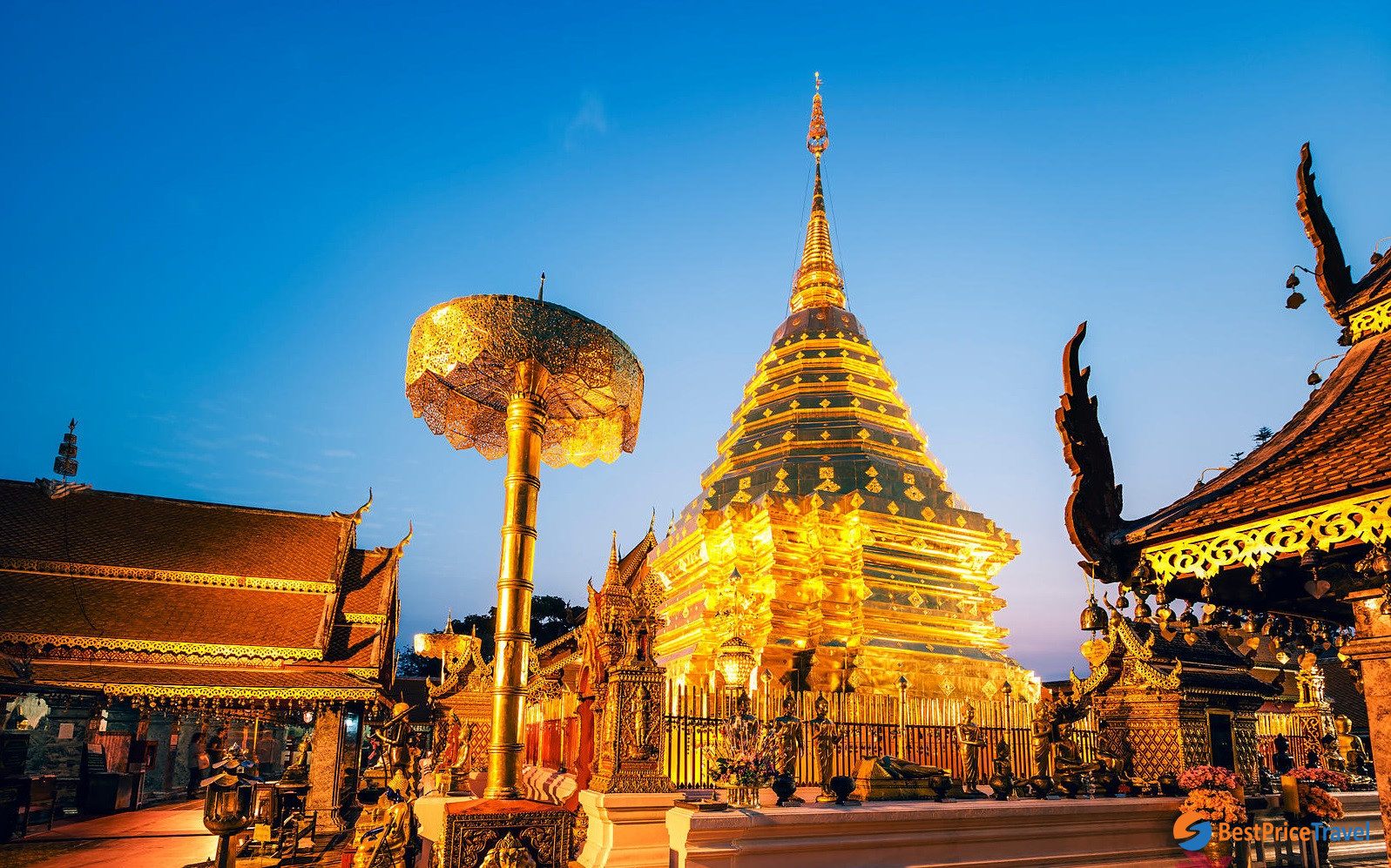
Chiang Mai is one of those cities that takes about twenty minutes to fall in love with and several trips to feel like you have really understood. The old city walls, the temple bells in the morning, the smell of khao soi from a street cart, the mountains sitting quietly behind everything. There is a lot going on here, and the challenge is never finding things to do. It is knowing where to start.
This list is not just the usual roundup of temples and markets. Some of these experiences are well known for good reason. Others are the kind of thing you only discover because someone who actually lives here told you about them. Either way, all twenty are genuinely worth your time.

1. Watch the Monks at Dawn
Set your alarm for 6am. Walk to the streets near Wat Phra Singh or Wat Chedi Luang and wait quietly. The alms-giving procession, called tak bat, happens every morning as monks in saffron robes walk single file through the neighbourhood collecting offerings from local residents. Nobody is performing for tourists. This is just daily life in a city where Buddhism shapes everything. You can observe respectfully from a distance, and the experience will likely stay with you longer than anything else you do that day.
For a deeper introduction to this ritual, the sunrise alms walk experience offers a guided version with context and cultural briefing that makes the whole thing a lot more meaningful.

2. Spend a Morning Inside the Old City
The square kilometre enclosed by the old moat is where Chiang Mai started in 1296 and where a lot of its character still lives. The temples inside the walls Wat Chedi Luang, Wat Phra Singh, Wat Chiang Man are all within easy walking distance of each other. Come before 9am when the light is soft and the tour groups have not yet arrived. Buy a coffee from one of the small carts near the Three Kings Monument and walk slowly. There is no correct route.


3. Take a Cooking Class at a Farm
Thai cooking classes have become a staple of every Southeast Asia itinerary, and Chiang Mai does them well. The best ones take you to a local market first thing in the morning to buy ingredients, then head out to a farm or garden where you learn to make four or five dishes from scratch. Northern Thai cuisine is different from what you find in Bangkok the flavours are earthier, the curries are drier, and khao soi, a coconut-based noodle soup with crispy egg noodles on top, is something you will probably want to make again at home.

4. Visit an Ethical Elephant Experience
If you have come to Chiang Mai at least partly because of the elephants, you are not alone. But not all elephant experiences are equal, and it is worth taking five minutes to choose one carefully. Ethical sanctuaries do not offer riding. They let elephants move freely, feed them natural food, and structure the visit around observation and genuine interaction rather than performance.
The Kerchor Karen Community Elephants full-day experience is one of the most honest elephant experiences around Chiang Mai. It is run by a local Karen community where the animals are treated as family members, not attractions. The day includes a welfare briefing, feeding, walking alongside the elephants, bamboo rafting, and a waterfall visit. Everything moves at the elephants' pace, not yours.

5. Learn to Carve Wood in the Wua Lai Quarter
The Wua Lai Road area, south of the Old City, is where Chiang Mai's silversmithing and woodworking tradition has been concentrated for generations. Some workshops there have been run by the same families for a very long time. A two-hour wood carving session is genuinely accessible for beginners, and you leave with something you made yourself. It is a much more interesting souvenir than anything you would buy at a market stall.
6. Hike to Doi Suthep in the Morning
The temple of Doi Suthep sits on a mountain about 15 kilometres from the city centre, and the views over Chiang Mai from the top are extraordinary. Most visitors take a songthaew up. The better option, if your knees are up for it, is the Monk's Trail — a forested path that winds upward from near Chiang Mai University through trees and past a smaller temple called Wat Pha Lat. The hike takes roughly 90 minutes. Going up early means cool air, almost no crowds, and the best light of the day.

7. Try Sound Healing
This might sound unusual if you have never encountered it. Tibetan singing bowls, placed around and on the body, produce vibrations that a lot of people find genuinely relaxing in a way that is different from a standard massage. Chiang Mai has become a real centre for this kind of practice, partly because of the meditation traditions that have always been strong in the north, and partly because the city attracts people looking for exactly this kind of thing. Worth trying at least once.

8. Explore Mae Kampong Village
About an hour from the city by car, Mae Kampong is a small village in the hills that most people in Chiang Mai's tourist circuit completely miss. There is a waterfall, a famous treehouse café perched above the valley, and a general sense of quiet that is very different from the energy of the city. The village is known for its fermented tea leaves, a local product that has been made here for generations. Go on a weekday if you can.

9. Kayak on the Mae Ping River at Sunset
The Mae Ping River runs along the eastern edge of Chiang Mai, and watching the city from the water at the end of the afternoon is one of those experiences that reframes how you see a place. The light changes fast, the pace is slow, and the river gives you a completely different perspective on the city's scale and rhythm.

10. Join the Sunday Walking Street
Every Sunday evening, Wualai Road closes to traffic and turns into one of the best markets in northern Thailand. Local artisans sell silver jewellery, handwoven fabrics, wood carvings, pottery, and food. It is not the same as Chiang Mai's night bazaar, which caters mainly to tourists. The Sunday market has a more local feel, the craft quality is generally higher, and the street food here particularly the sai oua (northern Thai sausage) and nam prik noom (green chilli dip) — is genuinely good.

11. Take a Multi-Day Trek into the Hills
The mountains around Chiang Mai are not just scenery. They are home to communities Karen, Akha, Hmong, Lisu that have lived in the highlands for generations and in many cases speak their own languages rather than standard Thai. A two or three-day trek into this territory, staying in a village overnight, is one of the most genuinely immersive experiences available anywhere in Southeast Asia. You will walk through rice paddies, cross streams, sleep in a bamboo house, and eat food cooked over a fire. It changes your sense of what northern Thailand actually is.

12. Watch a Muay Thai Fight Live
The national sport of Thailand is worth seeing in person at least once. Chiang Mai has a dedicated Muay Thai stadium where fights happen several times a week, with local fighters competing at various levels. The atmosphere is loud, the skill level is often surprising, and the whole evening has an energy that is very different from watching the sport on a screen. Get there early for a good seat near the ring.

13. Make a Silver Ring in Wua Lai
The silversmithing tradition in Chiang Mai goes back centuries. In a two-hour workshop, you work with sterling silver sheet, choose your own design from a range of patterns, and go through the full process of sizing, shaping, soldering, and finishing. Most people who do this are surprised by how much they actually make with their hands, and the ring you leave with is something genuinely handmade rather than assembled.

14. Do a Thai Herbal Workshop
Northern Thailand has a long tradition of herbal medicine, and workshops that teach you to make traditional remedies are both educational and quietly enjoyable. Making a Thai yadom, the herbal inhaler you see people using everywhere in Thailand, takes about an hour and involves grinding and blending dried herbs into a small container that you actually keep. The herbal tea blending workshops are good too, particularly if you want to understand how traditional Thai wellness practices actually work before booking a massage.

15. Climb the Sticky Waterfall
Bua Thong Waterfall, known locally as the Sticky Waterfall, is one of those places that sounds impossible until you are standing on it. The limestone rock face is covered in calcium-rich water that gives it enough traction for people to climb straight up the flowing water with bare feet. It sounds terrifying. It is actually more fun than alarming, and children manage it as easily as adults. The drive there takes about 90 minutes from the city, and it is worth combining with the large cave system nearby.

16. Take Aerial Yoga
Chiang Mai has a strong yoga scene, and aerial yoga practiced in hammocks suspended from the ceiling is available at several studios in the city. It is more accessible than it looks, the inversions are genuinely good for the spine, and the experience of floating a metre off the floor for an hour is more relaxing than you would expect.

17. Have Breakfast in Nimman
The Nimmanhaemin neighbourhood, just west of the Old City, is where Chiang Mai's café culture is most concentrated. The area has more specialty coffee shops per block than almost anywhere else in Asia, and the breakfast options range from traditional northern Thai dishes to pastries to excellent eggs. It is best experienced slowly, on foot, on a morning when you have nowhere specific to be. Pick a place that looks interesting, order something you do not recognise, and stay longer than you planned.
18. Go Ziplining in the Rainforest
The forest on the slopes around Chiang Mai is dense, green, and remarkably close to the city. Several zipline courses operate in this terrain, ranging from short introductory runs to full-day adventures with multiple platforms and long stretches above the canopy. The Kingkong Zipline is one of the longest in the area, with a full-day programme that covers serious distance through the forest. It is the kind of activity that sounds better suited to teenagers but ends up being enjoyed by pretty much everyone.

19. Watch the Sunrise from Doi Inthanon
Doi Inthanon is the highest point in Thailand, about 90 kilometres south of Chiang Mai. The summit is often in cloud by mid-morning, which means arriving at dawn is the only reliable way to see the view clearly. The drive up through the national park passes two large pagodas built in honour of the King and Queen, a series of waterfalls, and forest that feels genuinely wild. Getting there requires an early start, but the summit at first light, before the temperature rises, is worth every minute of the drive.

20. Eat Khao Soi
There are restaurants in Chiang Mai that have been serving this dish for decades. Khao soi is a coconut curry broth served with egg noodles, braised meat usually chicken or beef and a tangle of crispy fried noodles on top, with a side of pickled mustard greens, shallots, and lime. It is the defining dish of northern Thailand and nothing like what you find in the south. The best bowls are served in unremarkable places where the tables are plastic, the stools are low, and the cook has been making the same recipe for a very long time. Ask a local where they go.

How to Make the Most of Chiang Mai
Three days is the minimum. Five is better. The city rewards a slower pace, and the best experiences here the morning temple walks, the village treks, the long conversations over food are not things you can rush.
If you want to go beyond the city and into the mountains, the hills, and the communities that make northern Thailand genuinely different from the rest of the country, a good place to start is browsing the full range of guided experiences on Guidestination, where most of what is listed above can be arranged with a local guide.
FAQ
What is Chiang Mai most famous for ? Its combination of ancient temples, traditional crafts, ethical elephant experiences, and access to the northern highlands. It is also known for having one of the best street food scenes in Thailand and a strong wellness and yoga culture.
How many days do you need in Chiang Mai ? Three days covers the main highlights comfortably. Five days lets you add a multi-day trek, a day trip to Doi Inthanon, and enough time to actually slow down. A week or more starts to feel like a different kind of trip entirely, closer to living there than visiting.
Is Chiang Mai good for solo travelers ? Very. The city is easy to navigate, the English level is high compared to many parts of Thailand, the guesthouse and hostel scene is well developed, and group tours and treks make it easy to meet people.
What is the best time to visit Chiang Mai ? November to February is the coolest and driest period. March to May is hot and can be smoky due to agricultural burning in the region. June to October is the rainy season, which brings greener landscapes and fewer crowds but occasional flooding in low-lying areas.